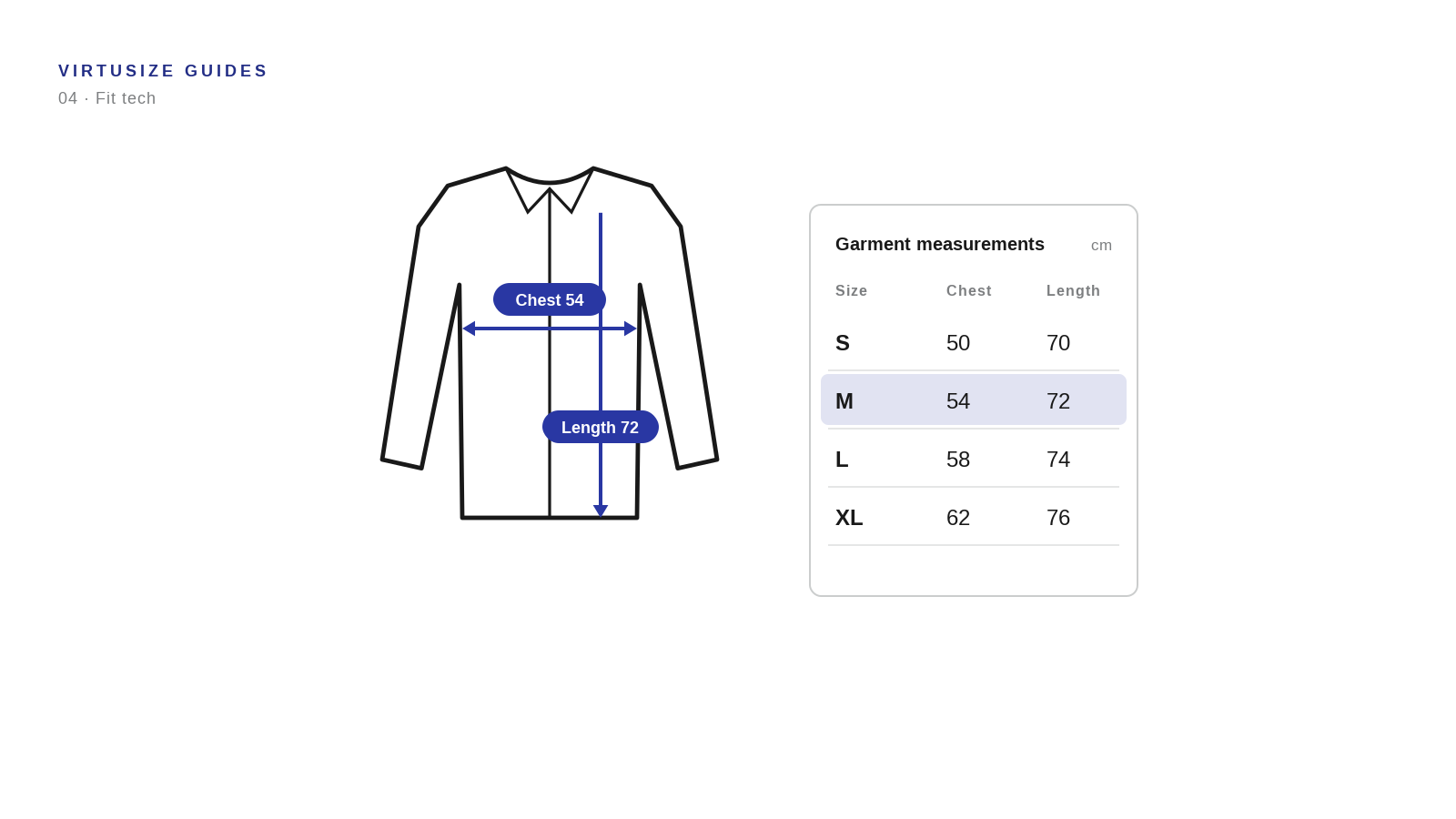

A shopper finds a jacket they love, adds it to the cart, and then hesitates. Medium or large? They check the size chart, open the reviews, compare with a brand they know, and close the tab to "think about it." They don't come back.
This is fit anxiety: the worry that an item won't fit, strong enough to stop a purchase. It rarely appears in analytics reports by name, but it is one of the main causes of cart abandonment in fashion.
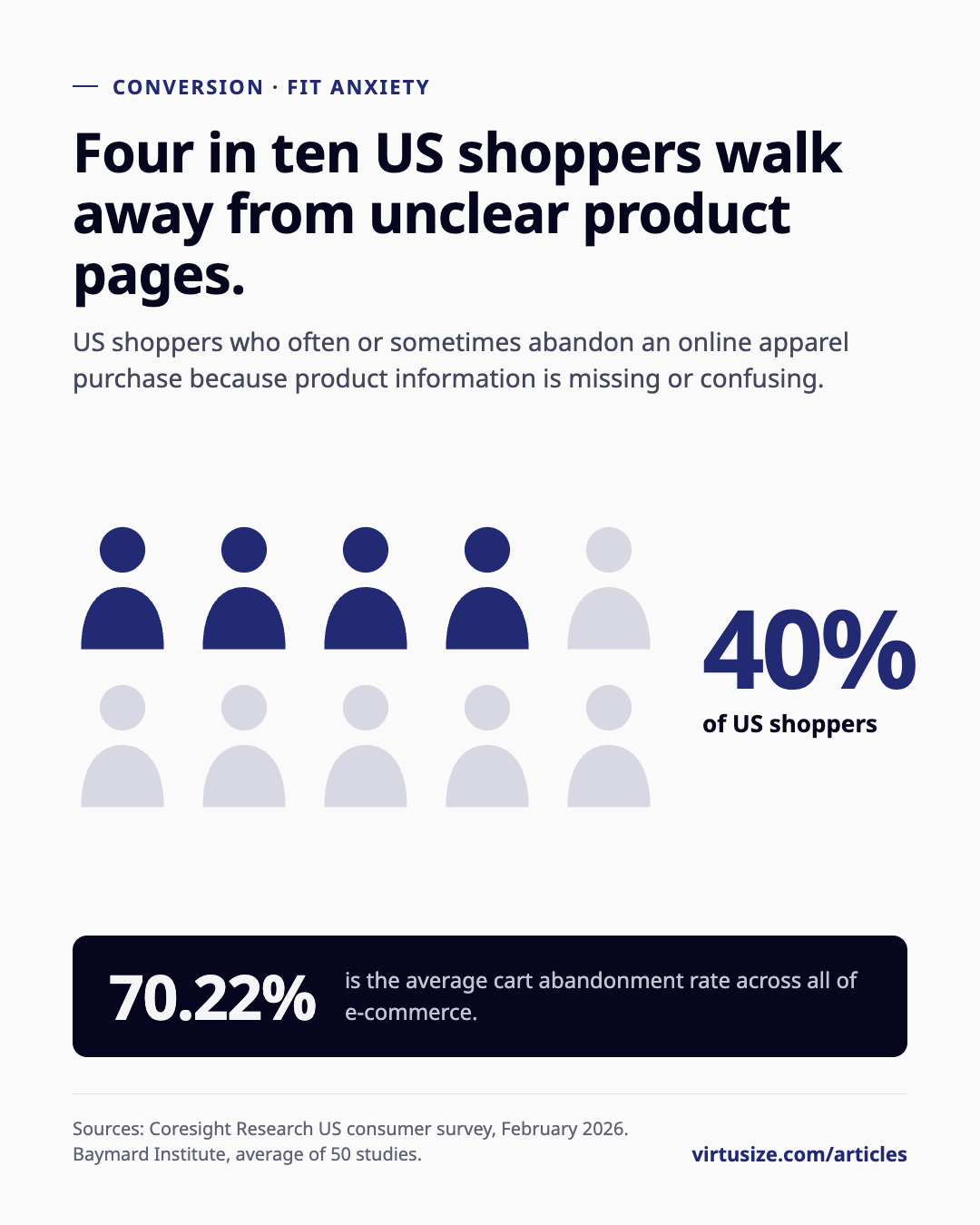
The scale is large. Across all of e-commerce, the documented average cart abandonment rate is 70.22%, according to the Baymard Institute, based on 50 studies. In apparel, product information is a specific problem: around 40% of US shoppers say they frequently or sometimes abandon an online apparel purchase because information on the product page is missing or confusing, according to a February 2026 survey by Coresight Research.
What does fit anxiety look like?
Fit anxiety shows up in a few predictable ways:
- Hesitating at the size selector: switching between sizes, opening and closing the size guide.
- Leaving to research: searching for reviews or "does [brand] run small" in another tab.
- Bracketing: adding two sizes to hedge.
- Cart abandonment: leaving items in the cart with no purchase.
- Defaulting to brands they know: buying from a brand whose sizing they already trust, even if they preferred your product.
The last one is the most costly and the least visible. Fit anxiety pushes shoppers toward familiar brands, which makes it harder for newer or international brands to win first-time customers.
Why is fit anxiety worse online?
In a store, a shopper can try three sizes in five minutes. Online, the cost of guessing wrong is a return parcel, a wait for a refund, and possibly a second attempt. Even with free returns, that hassle is real, and shoppers weigh it before they buy.
Fit anxiety is higher for:
- First purchases from a brand, where the shopper has no reference point.
- Fitted items like jeans, tailoring and outerwear, where small differences matter.
- Higher-priced items, where the stakes of a mistake feel higher.
- Cross-border purchases, where size systems differ.
How to spot fit anxiety in your data
You can't measure anxiety directly, but you can measure its signals:
- Size-guide open rate vs. conversion. If many shoppers open the size guide but few of them buy, the guide isn't resolving their doubt.
- Size-selector interactions. Repeated switching between sizes before abandonment.
- Cart abandonment by category. Abandonment higher on fitted categories than on accessories points to fit.
- Multi-size orders. The share of orders containing the same item in more than one size.
- Customer service questions. "What size should I get?" messages are fit anxiety in writing.
Five ways to reduce cart abandonment in fashion
1. Answer "which size?" for each shopper
A size recommendation tool beside the size selector gives each shopper a specific answer, which is the most direct cure for fit anxiety. Shoppers see "we recommend M for you" instead of a table of numbers.
2. Show the fit visually
A recommendation is more convincing when shoppers can see why. Virtusize overlays the new item on a garment the shopper already owns, so they see exactly where it will be longer, shorter, wider or slimmer.
3. Use social proof about fit
Summarise fit feedback from reviews ("Most customers say this runs true to size") and show reviewers' heights and sizes.
4. Remind shoppers that returns are easy
A clear returns line near the add-to-cart button lowers the perceived risk. It doesn't remove fit anxiety, but it reduces the stakes.
5. Follow up abandoned carts with fit help
Abandoned-cart emails usually say "you left something behind." For fashion, try adding "Not sure about your size?" with a link back to the product's size recommendation.
The payoff
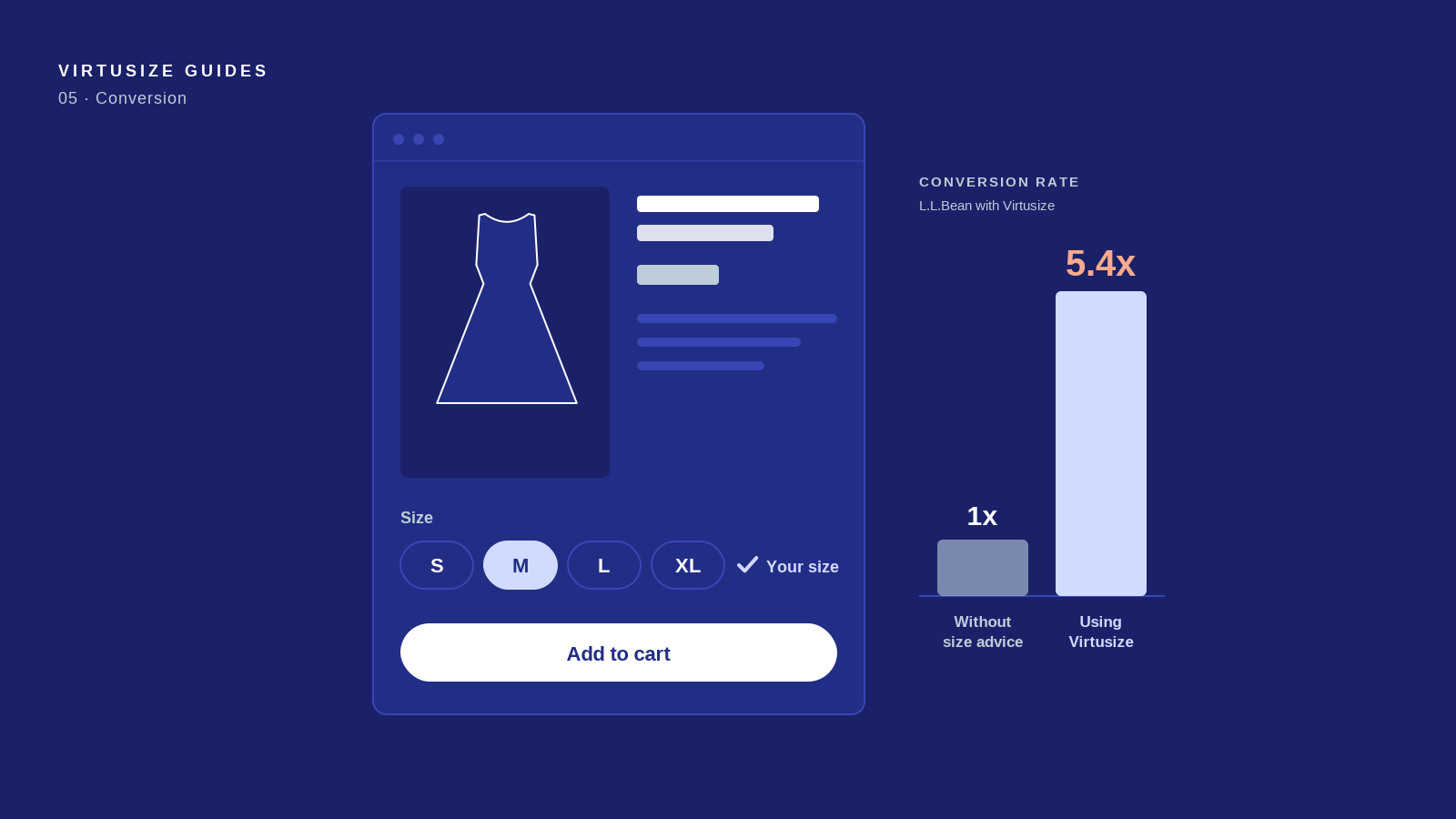
Reducing fit anxiety helps on both sides of the order. More hesitant shoppers buy, and those who buy are more likely to keep what they ordered. L.L.Bean saw a 5.4x conversion uplift among shoppers using Virtusize, and Under Armour saw 27% fewer size-based returns. For more product-page fixes, read How to Increase Conversion Rates on Fashion Product Pages.
Give your shoppers the confidence to buy. Book a Virtusize demo
Frequently asked questions
What is fit anxiety?
Fit anxiety is a shopper's worry that clothing bought online won't fit. It causes hesitation, bracketing and abandoned carts.
Why do shoppers abandon carts on fashion sites?
Common reasons across e-commerce include unexpected extra costs, slow delivery and long checkouts. In fashion, uncertainty about size and fit is a major additional cause: around 40% of US shoppers say they abandon online apparel purchases because product information is missing or confusing (Coresight Research, 2026).
How can fashion retailers reduce cart abandonment?
Give shoppers a personal size recommendation, show fit visually, use review-based fit feedback, make returns clear and follow up abandoned carts with sizing help.
Does free returns solve fit anxiety?
It helps by lowering the risk, but shoppers still dislike the hassle of returns. Confident size guidance addresses the cause.
A shopper finds a jacket they love, adds it to the cart, and then hesitates. Medium or large? They check the size chart, open the reviews, compare with a brand they know, and close the tab to "think about it." They don't come back.
This is fit anxiety: the worry that an item won't fit, strong enough to stop a purchase. It rarely appears in analytics reports by name, but it is one of the main causes of cart abandonment in fashion.
The scale is large. Across all of e-commerce, the documented average cart abandonment rate is 70.22%, according to the Baymard Institute, based on 50 studies. In apparel, product information is a specific problem: around 40% of US shoppers say they frequently or sometimes abandon an online apparel purchase because information on the product page is missing or confusing, according to a February 2026 survey by Coresight Research.
What does fit anxiety look like?
Fit anxiety shows up in a few predictable ways:
- Hesitating at the size selector: switching between sizes, opening and closing the size guide.
- Leaving to research: searching for reviews or "does [brand] run small" in another tab.
- Bracketing: adding two sizes to hedge.
- Cart abandonment: leaving items in the cart with no purchase.
- Defaulting to brands they know: buying from a brand whose sizing they already trust, even if they preferred your product.
The last one is the most costly and the least visible. Fit anxiety pushes shoppers toward familiar brands, which makes it harder for newer or international brands to win first-time customers.
Why is fit anxiety worse online?
In a store, a shopper can try three sizes in five minutes. Online, the cost of guessing wrong is a return parcel, a wait for a refund, and possibly a second attempt. Even with free returns, that hassle is real, and shoppers weigh it before they buy.
Fit anxiety is higher for:
- First purchases from a brand, where the shopper has no reference point.
- Fitted items like jeans, tailoring and outerwear, where small differences matter.
- Higher-priced items, where the stakes of a mistake feel higher.
- Cross-border purchases, where size systems differ.
How to spot fit anxiety in your data
You can't measure anxiety directly, but you can measure its signals:
- Size-guide open rate vs. conversion. If many shoppers open the size guide but few of them buy, the guide isn't resolving their doubt.
- Size-selector interactions. Repeated switching between sizes before abandonment.
- Cart abandonment by category. Abandonment higher on fitted categories than on accessories points to fit.
- Multi-size orders. The share of orders containing the same item in more than one size.
- Customer service questions. "What size should I get?" messages are fit anxiety in writing.
Five ways to reduce cart abandonment in fashion
1. Answer "which size?" for each shopper
A size recommendation tool beside the size selector gives each shopper a specific answer, which is the most direct cure for fit anxiety. Shoppers see "we recommend M for you" instead of a table of numbers.
2. Show the fit visually
A recommendation is more convincing when shoppers can see why. Virtusize overlays the new item on a garment the shopper already owns, so they see exactly where it will be longer, shorter, wider or slimmer.
3. Use social proof about fit
Summarise fit feedback from reviews ("Most customers say this runs true to size") and show reviewers' heights and sizes.
4. Remind shoppers that returns are easy
A clear returns line near the add-to-cart button lowers the perceived risk. It doesn't remove fit anxiety, but it reduces the stakes.
5. Follow up abandoned carts with fit help
Abandoned-cart emails usually say "you left something behind." For fashion, try adding "Not sure about your size?" with a link back to the product's size recommendation.
The payoff
Reducing fit anxiety helps on both sides of the order. More hesitant shoppers buy, and those who buy are more likely to keep what they ordered. L.L.Bean saw a 5.4x conversion uplift among shoppers using Virtusize, and Under Armour saw 27% fewer size-based returns. For more product-page fixes, read How to Increase Conversion Rates on Fashion Product Pages.
Give your shoppers the confidence to buy. Book a Virtusize demo
Frequently asked questions
What is fit anxiety?
Fit anxiety is a shopper's worry that clothing bought online won't fit. It causes hesitation, bracketing and abandoned carts.
Why do shoppers abandon carts on fashion sites?
Common reasons across e-commerce include unexpected extra costs, slow delivery and long checkouts. In fashion, uncertainty about size and fit is a major additional cause: around 40% of US shoppers say they abandon online apparel purchases because product information is missing or confusing (Coresight Research, 2026).
How can fashion retailers reduce cart abandonment?
Give shoppers a personal size recommendation, show fit visually, use review-based fit feedback, make returns clear and follow up abandoned carts with sizing help.
Does free returns solve fit anxiety?
It helps by lowering the risk, but shoppers still dislike the hassle of returns. Confident size guidance addresses the cause.