

For fashion e-commerce in Japan, late November to early January is the busiest stretch of the year, and Black Friday now opens it. It isn't one sale but several in a row: Black Friday, Christmas gifting, winter sales, fukubukuro (lucky bags) and hatsuuri (the first sales of the New Year). Each brings a different kind of shopper and a different sizing problem. For global brands selling into Japan, it's also the biggest chance of the year to win new Japanese customers.
How big is Black Friday in Japan?
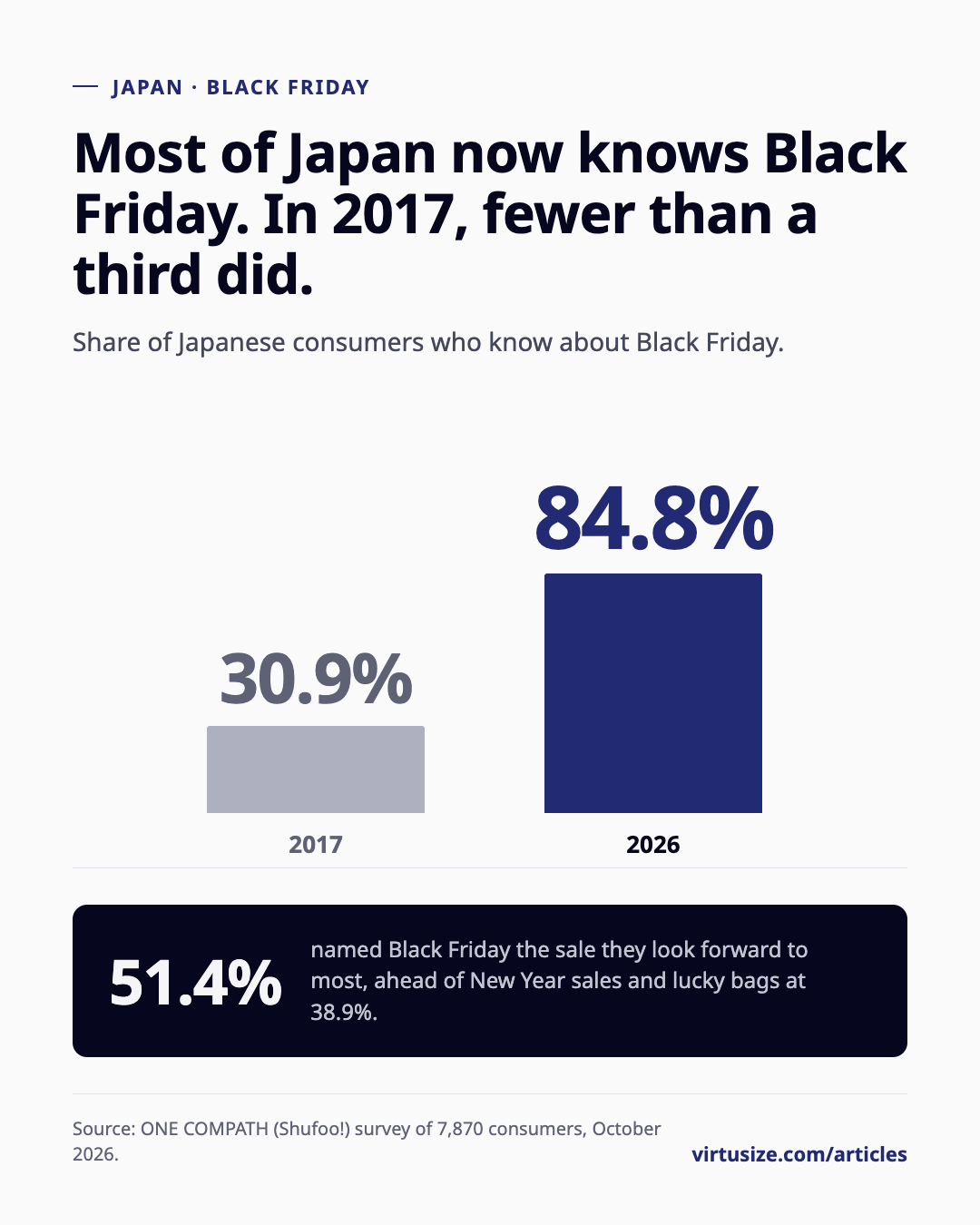
Black Friday is now known to most Japanese consumers and is the sale they look forward to most. In an October 2026 survey of 7,870 consumers by ONE COMPATH's Shufoo!, 84.8% said they knew about Black Friday, up from 30.9% when the survey began in 2017. Asked which sale they were most looking forward to, 51.4% chose Black Friday, ahead of New Year sales and lucky bags at 38.9%.
For fashion, Black Friday lands when winter outerwear and knitwear, high-value, fit-sensitive items, are selling, and many shoppers now buy before the traditional year-end winter sales.
Japan's holiday sales and their sizing problems
Late November: Black Friday and Cyber Monday
- Sizing problem: many first-time customers buying fit-sensitive winter items.
- What helps: size recommendations and fit notes.
Early to mid December: Christmas gifting
- Sizing problem: the buyer doesn't know the recipient's size.
- What helps: gift sizing help and easy exchanges.
Late December to January: winter sales and hatsuuri
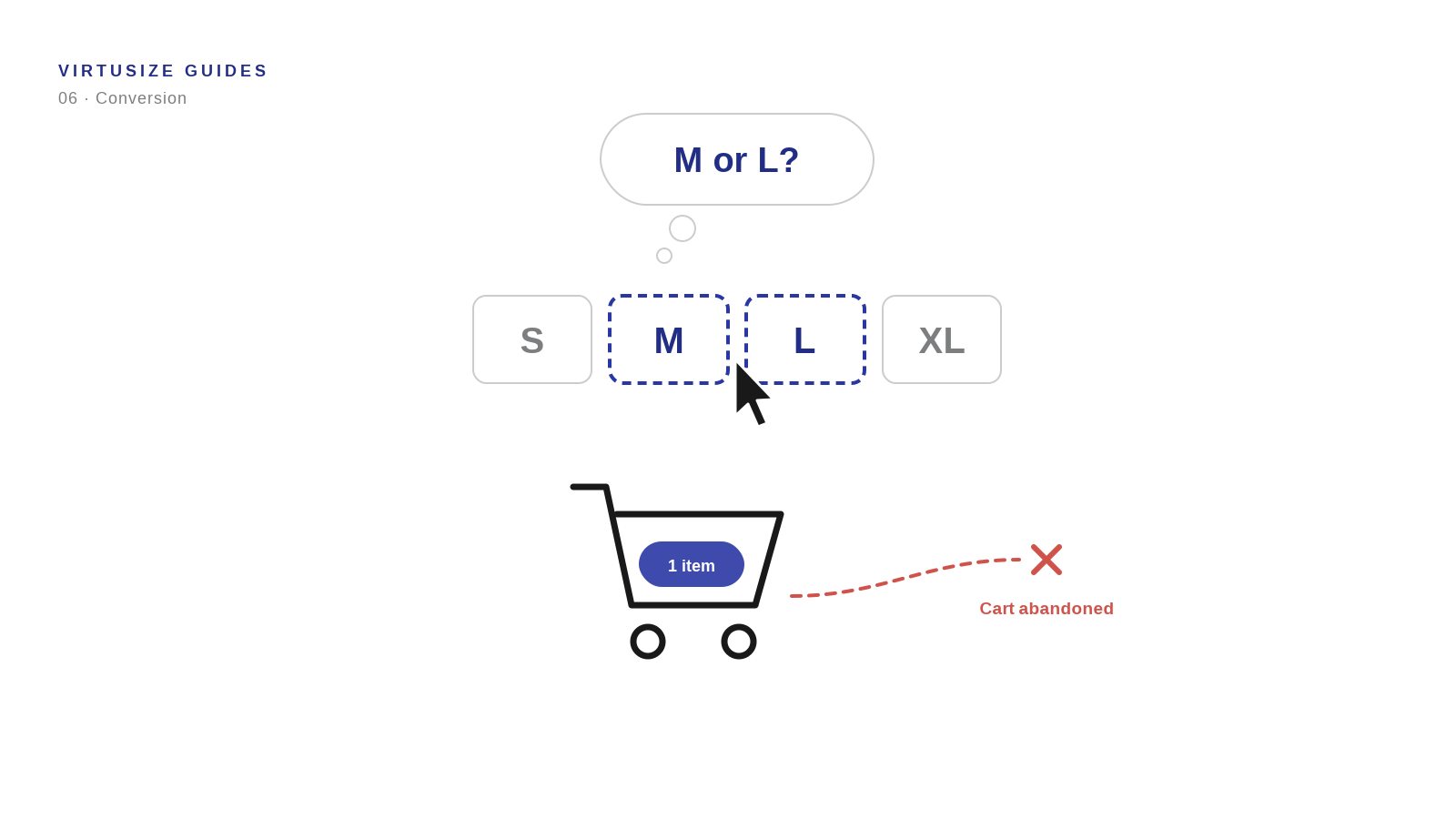
- Sizing problem: broken size runs, so shoppers settle for the wrong size.
- What helps: size-level stock checks and restock alerts.
Year-end to January: fukubukuro (lucky bags)
- Sizing problem: contents are unknown, so sizes often don't fit.
- What helps: lucky bags by size, with measurements published in advance.
Why do lucky bags cause sizing problems?
Fukubukuro are bought without knowing what's inside, so shoppers have almost no way to check size, and lucky bags are often sold as non-returnable. Customers who end up with items that don't fit tend to say so in reviews and on social media. Retailers can offer lucky bags by size, publish the size range and typical measurements of the contents in advance, or sell "preview" lucky bags where the contents are shown, which also makes size recommendations possible.
Checklist for Japan's holiday season
- Publish measurements in centimetres for every key sale item.
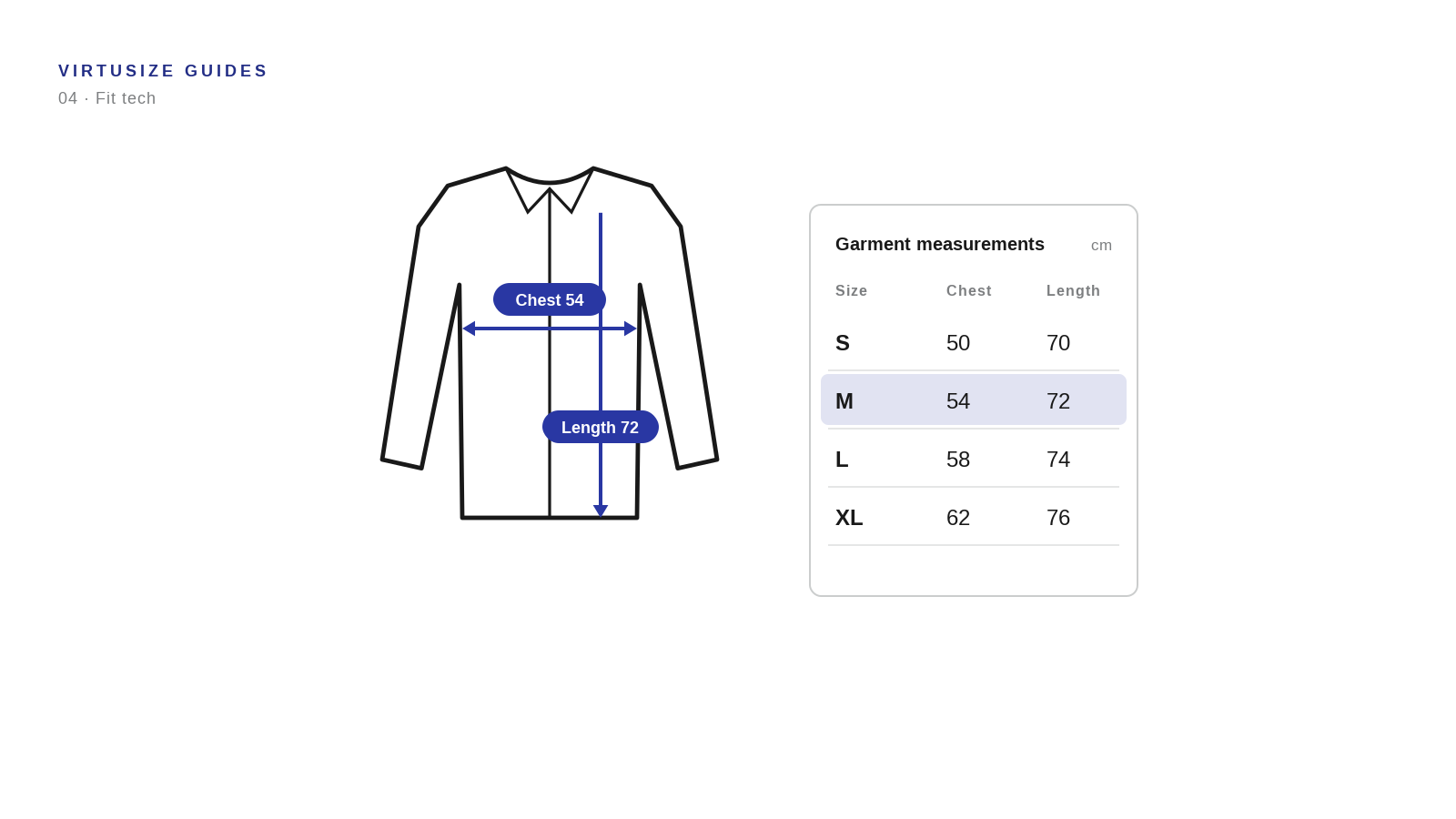
- Add fit notes to outerwear and knitwear, for example "Consider sizing up if wearing over a thick knit."
- Turn on Japanese-language size recommendations for first-time customers.
- State your return terms clearly. Japanese mail-order sales have no cooling-off period, so returns follow each retailer's stated policy. If no policy is stated, shoppers can return goods within eight days of receipt at their own shipping cost. Be especially clear about sale items and lucky bags.
- Show year-end delivery schedules, including carrier holidays.
- Check stock by size, so shoppers aren't pushed into buying the wrong size.
For a full returns plan for the sale itself, see How to Prepare Your Fashion Store for Black Friday Returns. For sale-day product pages, see the Black Friday Product Page Checklist.
What should global brands watch for?
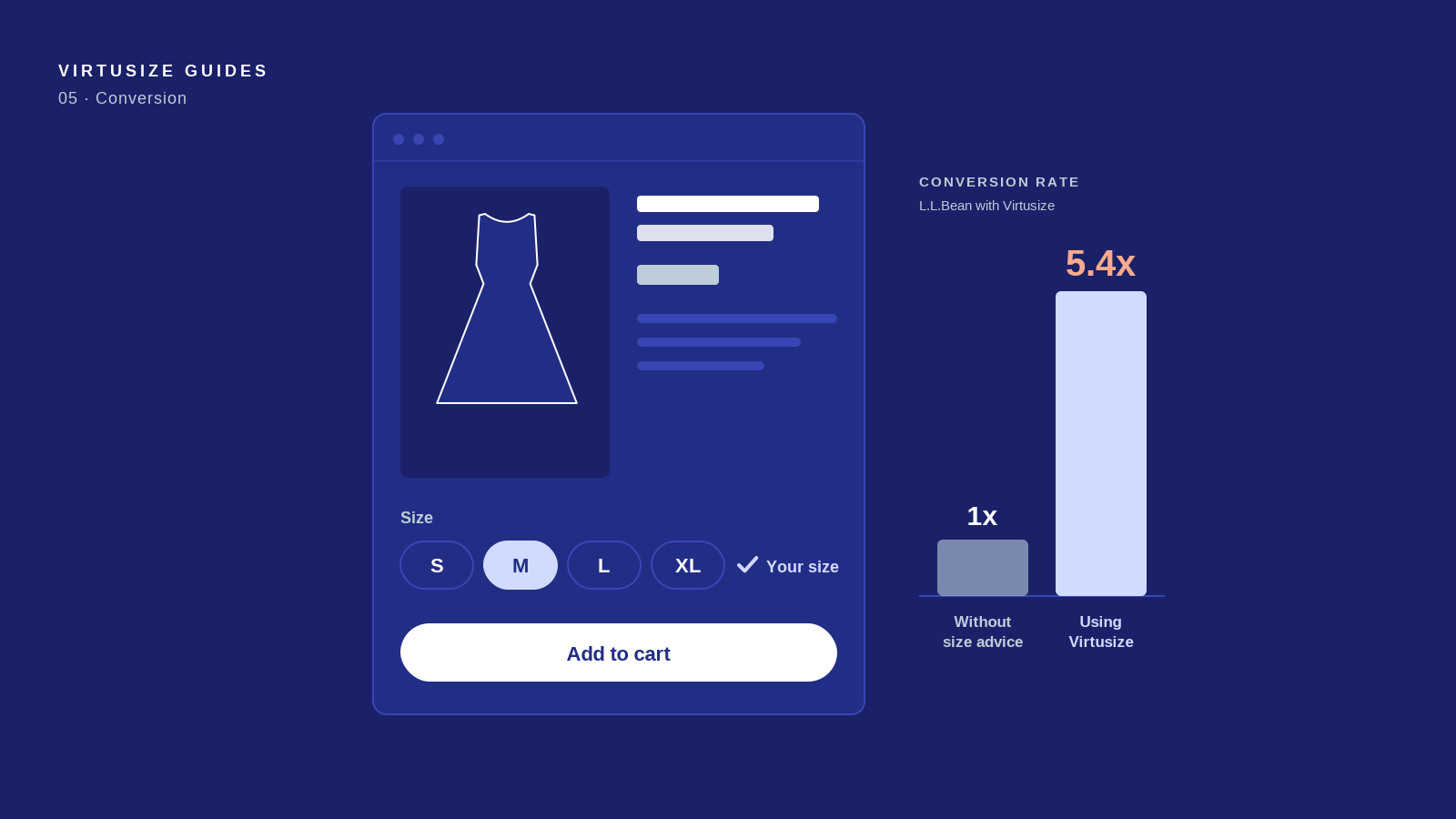
The holiday season is the best chance of the year to win Japanese customers, but shoppers who are wary of Western sizing may skip even a discounted item. Japanese size equivalents and a Japanese-language size recommendation tool lower that barrier.
The bottom line
Japan's holiday season is a run of different sales, each with its own sizing problem. Preparing for each one lifts sales while cutting returns and complaints.
Talk to our Tokyo team about Virtusize before the holiday season. Contact us
Frequently asked questions
Is Black Friday popular in Japan?
Yes. In an October 2026 Shufoo! survey, 84.8% of Japanese consumers knew about Black Friday, and 51.4% named it the sale they were most looking forward to. Winter clothing sells strongly.
What is fukubukuro?
Fukubukuro are "lucky bags" sold around New Year in Japan, containing a mix of products at a discount. Shoppers usually don't know the exact contents in advance.
Can shoppers in Japan return sale items bought online?
It depends on the retailer's stated return policy, because Japanese mail-order sales have no cooling-off period. If no policy is stated, shoppers can return goods within eight days of receipt at their own cost. Retailers should state clearly whether sale items can be returned.
When should brands start preparing for Japan's holiday sales?
Two to three weeks before Black Friday. Size information prepared then also works for the winter sales and hatsuuri.
For fashion e-commerce in Japan, late November to early January is the busiest stretch of the year, and Black Friday now opens it. It isn't one sale but several in a row: Black Friday, Christmas gifting, winter sales, fukubukuro (lucky bags) and hatsuuri (the first sales of the New Year). Each brings a different kind of shopper and a different sizing problem. For global brands selling into Japan, it's also the biggest chance of the year to win new Japanese customers.
How big is Black Friday in Japan?
Black Friday is now known to most Japanese consumers and is the sale they look forward to most. In an October 2026 survey of 7,870 consumers by ONE COMPATH's Shufoo!, 84.8% said they knew about Black Friday, up from 30.9% when the survey began in 2017. Asked which sale they were most looking forward to, 51.4% chose Black Friday, ahead of New Year sales and lucky bags at 38.9%.
For fashion, Black Friday lands when winter outerwear and knitwear, high-value, fit-sensitive items, are selling, and many shoppers now buy before the traditional year-end winter sales.
Japan's holiday sales and their sizing problems
Late November: Black Friday and Cyber Monday
- Sizing problem: many first-time customers buying fit-sensitive winter items.
- What helps: size recommendations and fit notes.
Early to mid December: Christmas gifting
- Sizing problem: the buyer doesn't know the recipient's size.
- What helps: gift sizing help and easy exchanges.
Late December to January: winter sales and hatsuuri
- Sizing problem: broken size runs, so shoppers settle for the wrong size.
- What helps: size-level stock checks and restock alerts.
Year-end to January: fukubukuro (lucky bags)
- Sizing problem: contents are unknown, so sizes often don't fit.
- What helps: lucky bags by size, with measurements published in advance.
Why do lucky bags cause sizing problems?
Fukubukuro are bought without knowing what's inside, so shoppers have almost no way to check size, and lucky bags are often sold as non-returnable. Customers who end up with items that don't fit tend to say so in reviews and on social media. Retailers can offer lucky bags by size, publish the size range and typical measurements of the contents in advance, or sell "preview" lucky bags where the contents are shown, which also makes size recommendations possible.
Checklist for Japan's holiday season
- Publish measurements in centimetres for every key sale item.
- Add fit notes to outerwear and knitwear, for example "Consider sizing up if wearing over a thick knit."
- Turn on Japanese-language size recommendations for first-time customers.
- State your return terms clearly. Japanese mail-order sales have no cooling-off period, so returns follow each retailer's stated policy. If no policy is stated, shoppers can return goods within eight days of receipt at their own shipping cost. Be especially clear about sale items and lucky bags.
- Show year-end delivery schedules, including carrier holidays.
- Check stock by size, so shoppers aren't pushed into buying the wrong size.
For a full returns plan for the sale itself, see How to Prepare Your Fashion Store for Black Friday Returns. For sale-day product pages, see the Black Friday Product Page Checklist.
What should global brands watch for?
The holiday season is the best chance of the year to win Japanese customers, but shoppers who are wary of Western sizing may skip even a discounted item. Japanese size equivalents and a Japanese-language size recommendation tool lower that barrier.
The bottom line
Japan's holiday season is a run of different sales, each with its own sizing problem. Preparing for each one lifts sales while cutting returns and complaints.
Talk to our Tokyo team about Virtusize before the holiday season. Contact us
Frequently asked questions
Is Black Friday popular in Japan?
Yes. In an October 2026 Shufoo! survey, 84.8% of Japanese consumers knew about Black Friday, and 51.4% named it the sale they were most looking forward to. Winter clothing sells strongly.
What is fukubukuro?
Fukubukuro are "lucky bags" sold around New Year in Japan, containing a mix of products at a discount. Shoppers usually don't know the exact contents in advance.
Can shoppers in Japan return sale items bought online?
It depends on the retailer's stated return policy, because Japanese mail-order sales have no cooling-off period. If no policy is stated, shoppers can return goods within eight days of receipt at their own cost. Retailers should state clearly whether sale items can be returned.
When should brands start preparing for Japan's holiday sales?
Two to three weeks before Black Friday. Size information prepared then also works for the winter sales and hatsuuri.