
A size recommendation tool is software on a fashion retailer’s product page that tells each shopper which size to buy for that specific item. Instead of asking the shopper to read a size chart and guess, it uses information about the shopper and the garment to suggest the size most likely to fit.
For retailers, the goal is simple: more shoppers buying with confidence, and fewer of them sending the item back. This guide explains how these tools work, compares the main approaches, and covers what to look for when choosing one.
Why do online fashion stores need size recommendation tools?
Because size labels and size charts don’t tell a shopper which size will fit them. In a physical store, sizing is solved in the fitting room. Online, the shopper has only a label and a chart, and neither is reliable on its own.
- Sizes aren’t standard. A medium at one brand can be a small or a large at another, and sizing differs between countries.
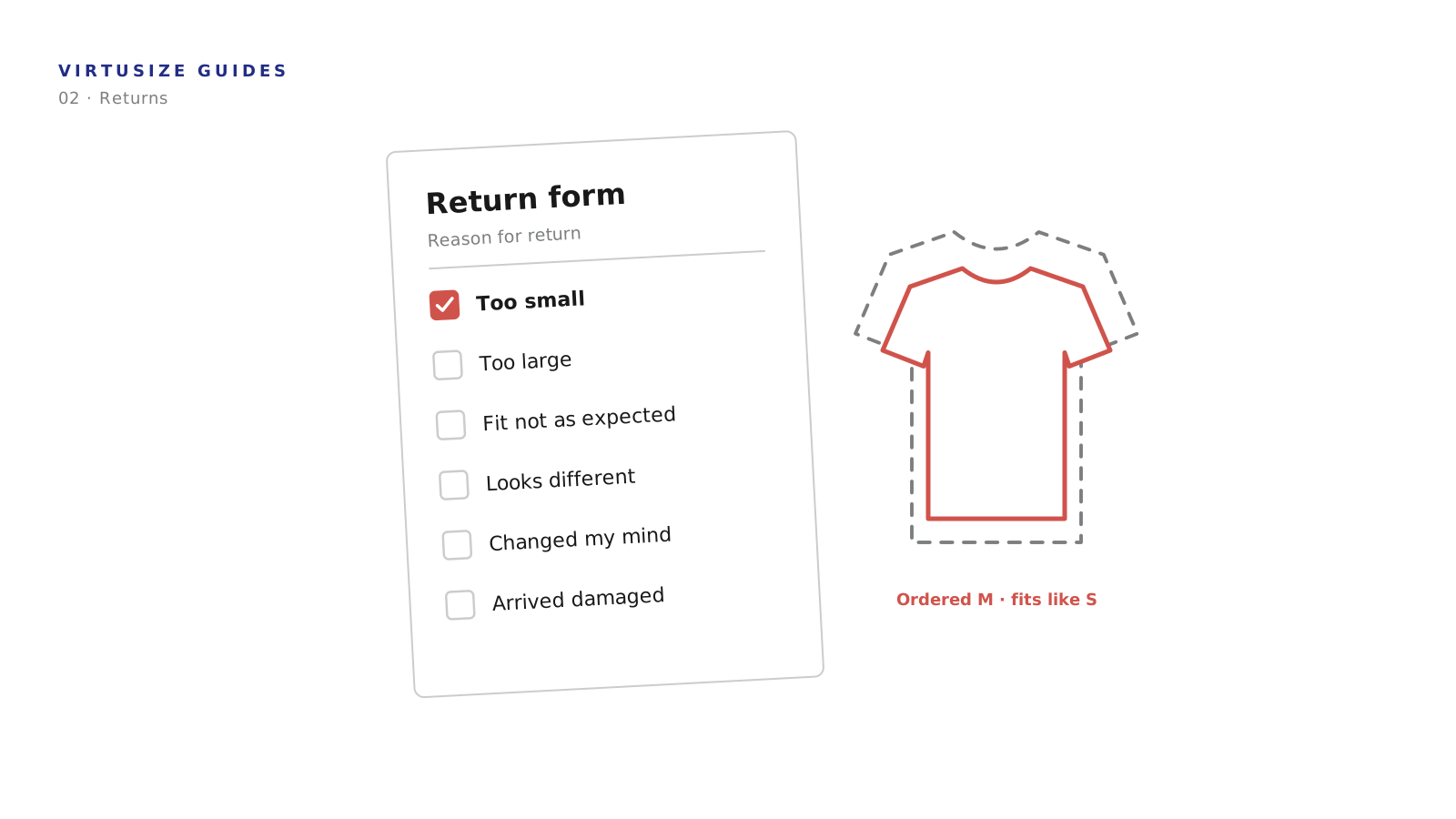
- Fit varies within a brand. A slim-fit shirt and a relaxed-fit shirt labelled M have different measurements.
- Size charts ask too much. Most shoppers won’t measure their chest with a tape measure before buying a T-shirt. We explain why in Why Size Charts Alone Don’t Solve Fit.
The result is guesswork, and guesswork leads to abandoned carts, bracketing and returns. When Coresight Research surveyed US apparel brands and retailers, 53% named size and fit as a top reason for returns (Coresight Research, 2023). A size recommendation tool replaces the guess with a specific answer.
How does a size recommendation tool work?
A size recommendation tool matches data about the garment with data about the shopper, then returns the size most likely to fit.
1. Product data. Measurements for each size of each garment: chest width, length, waist, inseam and so on. The more precise and complete this data is, the better the recommendation.
2. Shopper data. Something that describes the shopper’s body or preferred fit. Tools differ most here, as the next section explains.
3. The matching logic. The tool compares the two and returns a recommended size, often with a note on how it will fit (“slightly loose at the waist”). Some tools also learn from what shoppers keep and return over time.
What are the main types of size recommendation tool?
There are four main approaches, defined by what the shopper provides:
- Body questionnaire. The shopper enters height, weight, age, body shape and fit preference. It’s fast and needs no measuring, but it estimates body measurements, so it is less precise on fit.
- Garment comparison. The shopper picks a garment they already own and like. This reflects the fit they actually prefer, but needs a reference item in the database or entered by the shopper.
- Purchase history. The tool uses past orders and returns, so it’s effortless for repeat customers, but it doesn’t help first-time visitors.
- Body scanning. The shopper provides photos or a phone scan. This gives detailed body measurements, but the extra effort and privacy concerns reduce uptake.
The most effective tools combine approaches. A shopper might start with height and weight, then refine the result by comparing against a favourite item. Virtusize uses both: shoppers can get a recommendation from a few body details, and can see the new item visually overlaid on a garment they already own, so they understand the fit as well as the size.
What is the difference between size and fit?
Size is the label to buy; fit is how that size will feel on the body. A tool that only says “buy M” answers half the question. Shoppers also want to know whether M will be tight or loose, long or cropped, and two shoppers with identical measurements may prefer very different fits.
Good size recommendation tools show fit, not just size. Visual comparison against something the shopper owns is one of the clearest ways to do this, because it uses a reference they already understand. Our complete guide to virtual fitting explains this in more detail.
What does a size recommendation tool change for retailers?
It lifts conversion, reduces size-related returns and raises order values, because shoppers who are confident about size buy more and send less back.
Higher conversion. Shoppers who are unsure of their size often leave without buying. A confident recommendation removes that barrier. L.L.Bean saw a 5.4x conversion uplift among shoppers using Virtusize (read the case study).
Fewer returns. Shoppers who buy the right size the first time don’t send it back. Under Armour cut size-based returns by 27% year on year (read the case study).
Higher order values. Confident shoppers buy more per order and come back more often. Ralph Lauren Japan grew revenue per customer by around 75% in FY26 (read the case study).
Better data. Every interaction shows how real customers’ bodies and preferences compare with your size range. Merchandising and design teams can use this to improve grading and stock depth.
What should you look for when choosing a size recommendation tool?
Look for a tool that is quick for shoppers, proves its results with measured case studies, and fits your platform and markets.
- Ease for the shopper. Count the steps between landing on the product page and seeing a recommendation. Every extra question loses users.
- Accuracy you can verify. Ask for case studies with measured results, such as return rate and conversion, not just engagement.
- Fit visualisation. A size alone is less convincing than a size plus a clear picture of how it fits.
- Product data workload. Find out what measurements you need to supply, in what format, and how the vendor helps.
- Platform fit. Check integration with your e-commerce platform. Virtusize, for example, offers a Shopify app as well as integrations for custom stacks.
- Analytics. You should be able to see adoption, conversion and return impact by product.
- Language and market coverage. If you sell across Japan, Korea and Western markets, the tool needs to handle different size systems and languages.
- Privacy. Shoppers should know what data is used and why, with no more collected than needed.
Common objections, answered
“Our size chart is good enough.” A size chart only works if shoppers measure themselves and interpret a table. Most don’t. A better chart still helps, but it can’t tell each shopper which size is right for them.
“It’ll slow down our product pages.” Modern tools load asynchronously and appear as a button or widget. Test page speed during your trial.
“We don’t have measurement data.” Most retailers have it in tech packs already. A good vendor will help get it into shape.
The bottom line
A size recommendation tool turns the most uncertain moment in online fashion shopping (“which size?”) into a confident one. The best tools are easy for shoppers, show fit as well as size, and prove their results in conversion and returns.
See Virtusize on a live product page. Try the demo or book a call.
Frequently asked questions
What does a size recommendation tool do?
It suggests the right size of a specific garment for each shopper, using information like their height and weight or an item they already own, matched against the garment’s measurements.
Are size recommendation tools accurate?
Accuracy depends on the quality of the product measurements and the shopper data. Tools that compare against a garment the shopper owns reflect real fit preference, which improves accuracy.
Do size recommendation tools reduce returns?
Yes, when shoppers use them. Under Armour reduced size-based returns by 27% year on year with Virtusize.
What is the difference between a size recommendation tool and virtual fitting?
A size recommendation tool suggests which size to buy. Virtual fitting shows how that size will fit, for example by overlaying the item on a garment you own. Many tools, including Virtusize, do both.
How long does it take to add a size recommendation tool to a store?
It depends on your platform and how ready your measurement data is. Apps for platforms like Shopify can be installed quickly; custom integrations take longer.