
Every fashion retailer knows returns are expensive. Few know exactly how expensive. Return shipping is the cost that shows up on an invoice, but it is only the first line of a much longer bill. This guide breaks down the full cost of fashion e-commerce returns, explains why apparel is hit harder than almost any other category, and sets out the fixes that actually move the number.
The scale is hard to ignore. US retailers expected 19.3% of online sales to be returned in 2025, nearly one in every five dollars spent online, against 15.8% for retail overall. That adds up to about $850 billion in returned merchandise in a single year (NRF and Happy Returns, 2025 Retail Returns Landscape).
Why fashion has a returns problem other categories don't
A shopper buying headphones online knows what they will get. A shopper buying a pair of jeans does not. Clothing is the one category where the product has to fit a body the retailer has never seen, described by a size label that means something different at every brand.
A medium at one brand can be a small at the next. Two styles from the same brand can fit differently depending on the cut, the fabric and the intended silhouette. In a store, shoppers solve this in the fitting room. Online, the customer's living room becomes the fitting room, and the retailer pays for every round trip.
That is why size and fit are consistently the leading reasons shoppers give for sending clothes back. It is also good news: unlike damaged goods or late deliveries, fit is a problem retailers can do something about before the order is placed.
The seven costs hiding inside every return
When finance teams calculate the cost of a return, they often stop at shipping and refunds. The real figure includes at least seven components.
- Outbound shipping you already paid for. The original delivery cost is sunk. If the item comes back, that spend produced no revenue.
- Return shipping and labels. Free returns are now expected in many markets, which means the retailer absorbs the second leg as well.
- Processing and handling. Someone has to open the parcel, inspect the item, decide whether it is resellable, repackage it and put it back into stock. Each step costs warehouse labour.
- Markdowns and write-offs. Items often come back after the full-price window has passed. Seasonal pieces may return just as the season ends, so they sell at a discount or not at all. Damaged or worn items are written off entirely.
- Customer service. Return requests, exchange questions and refund-status emails all land in the support queue.
- Payment and refund fees. Depending on the payment provider, processing fees on the original transaction may not be refunded when the customer is.
- Lost lifetime value. A customer who receives something that doesn't fit is less likely to buy again. This is the hardest cost to measure and often the largest.
Add these together and a single return can wipe out the margin on the original sale, and sometimes on the next sale too.
The costs that don't show up on a spreadsheet
Some of the damage from high return rates never appears as a line item.
Inventory distortion. Stock that is in transit back to the warehouse is unavailable to sell. Popular sizes can show as out of stock while units sit in return parcels, costing full-price sales.
Bad demand data. If a size sells well but comes back half the time, sales data overstates true demand. Buying and merchandising teams then reorder the wrong sizes in the wrong quantities.
Brand trust. Shoppers remember the jacket that didn't fit more than the ten that did. Repeated fit disappointments teach customers that a brand's sizing can't be trusted online, which pushes them to buy elsewhere or to start ordering several sizes at once, a habit known as bracketing.
Environmental impact. Every return adds transport emissions and packaging, and a share of returned goods never gets resold.
Where returns come from: fixable vs. unfixable
Not every return is preventable, and it helps to separate them.
Returns you can prevent before purchase
- Too small or too large. Fix: size recommendations and garment measurements.
- Fit or silhouette not as expected. Fix: visual fit comparison and better product content.
- Looks different from photos (largely preventable). Fix: better photography, accurate colour and fabric close-ups.
- Ordered multiple sizes (bracketing). Fix: give shoppers confidence in a single size.
Returns you can partly prevent
- Changed mind. Fix: clear product content, so fewer purchases end in a mismatch.
Returns you can’t prevent on the product page
- Damaged or faulty. Fix: packaging and quality control.
- Late delivery. Fix: logistics.
The first four reasons all share a root cause: the shopper did not have enough information to choose the right item in the right size. That is where the biggest savings sit. We’ll look at each of these reasons in detail in our next article.
Five ways to reduce fashion e-commerce returns
1. Replace guesswork with size recommendations
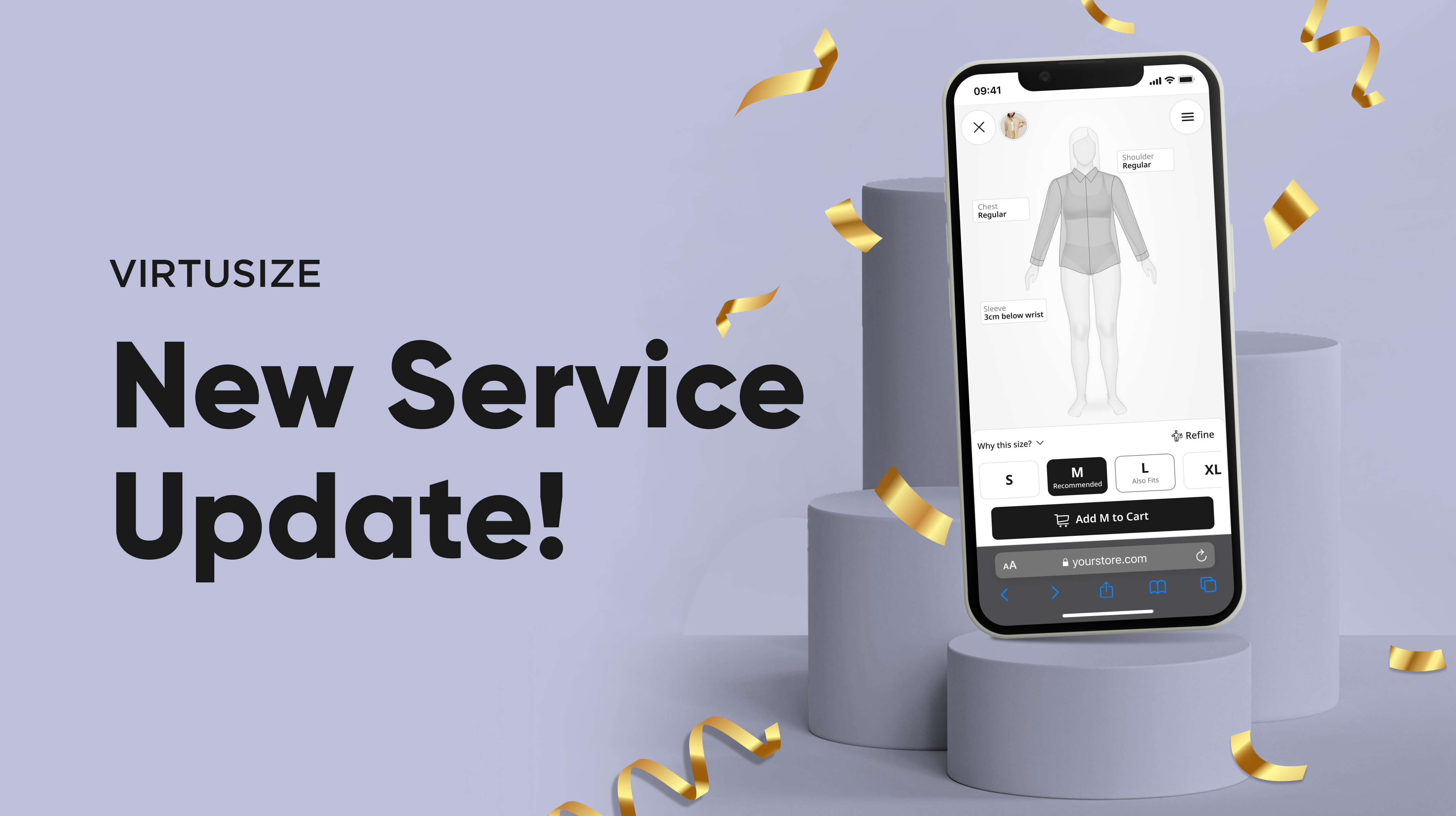
A size chart asks shoppers to measure themselves and then interpret a table. Most won't. A size recommendation tool does the work for them, using information they already know, such as a garment they own or their height and weight, to suggest the right size for that specific product. Under Armour reduced size-based returns by 27% after introducing Virtusize (https://www.virtusize.com/case-study).
2. Show fit, not just size
"Size M" tells shoppers nothing about whether a shirt is boxy or slim, cropped or long. Visual comparisons that overlay a new item against something the shopper already owns answer the question they actually have: will this fit me the way I like?
3. Publish real garment measurements
For every product, list the measurements of the garment itself (chest width, length, sleeve, inseam) rather than a generic body-size chart. It is the single cheapest improvement most product pages can make.
4. Use return-reason data properly
Make return reasons specific ("too tight in the shoulders" is more useful than "didn't fit") and review them by product, not just by category. A style with an unusually high "runs small" rate needs a product-page note, a fit adjustment from the design team, or both.
5. Design returns policy for the customer you want
Free, easy returns build trust, and removing them can cost more in lost conversion than it saves. The better approach is to keep returns easy while reducing the reasons customers need them.
Measuring progress
Track these four numbers monthly, split by category and by size:
- Return rate (units returned ÷ units sold)
- Size-related return rate (returns citing size or fit ÷ units sold)
- Net revenue per customer (revenue after returns)
- Repeat purchase rate among customers who returned an item
The second number is the one fit technology directly changes, and the third is the one your CFO cares about.
The bottom line
Returns are not just a logistics cost. They are a signal that shoppers did not have what they needed to choose well. Retailers that close that information gap sell more, keep more of what they sell, and turn first-time buyers into repeat customers.
See how Virtusize helps fashion retailers cut size-related returns. Book a demo